
 As your child loses baby teeth, you expect permanent teeth to take their place. But what if a permanent tooth does not come in?
Sometimes a tooth simply needs more time. In other cases, something may be preventing it from erupting normally. When a tooth is unable to erupt as expected, it is known as an impacted tooth.
At McDonough Orthodontics, we pay close attention to how your child’s permanent teeth are developing, including the teeth we cannot see yet. If a tooth seems to be taking longer than expected, we can determine whether it simply needs more time or whether something is getting in its way.
What Causes an Impacted Tooth?
A permanent tooth can become impacted when there is not enough space for it to come in, it develops at an unusual angle, or another tooth blocks its path. Sometimes a baby tooth remains in place longer than expected and interferes with the permanent tooth underneath it.
Children do not lose their baby teeth or get their permanent teeth on exactly the same schedule. A tooth that seems a little late does not automatically mean something is wrong.
If a permanent tooth is not appearing when expected, we can evaluate what is happening beneath the gums rather than relying on the calendar alone.
What Are the Signs of an Impacted Tooth?
Some signs we want parents to watch for include:
- A baby tooth that remains in place much longer than expected
- A permanent tooth that has not appeared even though the matching tooth on the other side has
- An unexplained space where a permanent tooth was expected to erupt
- Teeth erupting in unusual positions
- Crowding that appears to leave little room for another tooth
An impacted tooth does not always cause pain, swelling or other noticeable signs. Your child may feel perfectly fine even though a permanent tooth beneath the gums is not following its expected path.
How Do We Find an Impacted Tooth?
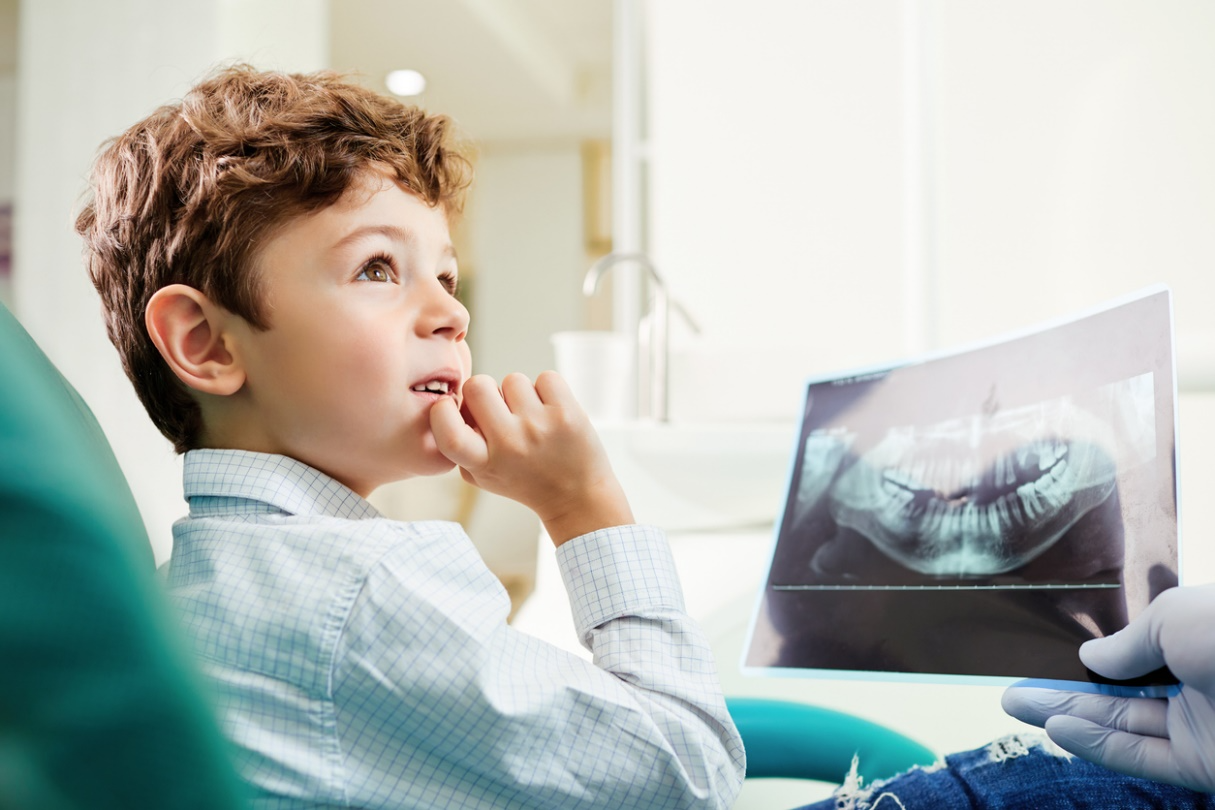 During an orthodontic evaluation, we look at how your child’s teeth, bite and jaws are developing. When appropriate, X-rays allow us to see permanent teeth that are still beneath the gums, including where they are positioned and whether they appear to have enough room to erupt.
The American Association of Orthodontists recommends that children have their first orthodontic evaluation no later than age 7. That does not mean every 7-year-old needs braces. Often, our recommendation is simply to keep an eye on how the teeth and jaws develop.
That is an important part of our OWLS program at McDonough Orthodontics. Designed for children ages 7 to 12 who are not ready for orthodontic treatment, OWLS allows us to monitor how their teeth and jaws develop over time. If everything is progressing as it should, we continue watching. If something changes, we can decide whether treatment should be considered.
Why Do Orthodontists Pay Attention to Canine Teeth?
Wisdom teeth are the teeth most commonly associated with impaction, but upper canine teeth are also among the permanent teeth most likely to become impacted. Because canines normally erupt earlier than wisdom teeth, their development is something we may be watching while your child is still growing.
Canines are the pointed teeth located between the front teeth and premolars. They have an important role in the bite and the appearance of the smile.
An impacted canine may remain beneath the gums or travel along a path that will not bring it into its expected position. Depending on where it is located, it can also affect neighboring teeth.
Parents generally cannot tell exactly where an unerupted canine is positioned simply by looking in their child’s mouth. X-rays allow us to see where the tooth is developing and the direction it is traveling.
How Is an Impacted Tooth Treated?
Treatment depends on which tooth is involved, where it is positioned, your child’s stage of dental development and what is happening with the surrounding teeth.
Sometimes our recommendation is simply to monitor the tooth. In other situations, orthodontic treatment may be used to make room for it to erupt, or a baby tooth or another obstruction may need to be addressed.
If an impacted tooth cannot erupt on its own, additional treatment may be needed. In some cases, an oral surgeon can expose the tooth so that we can gradually guide it into position with orthodontic treatment. If this is recommended, we will explain what is involved and coordinate care with the appropriate specialist.
Finding an impacted tooth does not automatically mean your child will need surgery. We first want to understand why the tooth has not erupted, where it is positioned and whether treatment is needed at all.
Keeping an Eye on Your Child’s Developing Smile
If your child has a baby tooth that seems determined to stick around, a permanent tooth that has not appeared when expected, or teeth that seem to be coming in somewhere you did not expect, we can take a closer look.
At McDonough Orthodontics, we follow our younger patients’ smiles as their teeth and jaws develop. Through our OWLS program, we can monitor that development over time and keep you informed about what we are seeing along the way.
Regular monitoring gives us the opportunity to see how permanent teeth are progressing and recommend the right next step at the right time. Whether that means continuing to watch your child’s smile develop or considering orthodontic treatment, we will help you understand what to expect as their smile grows.